Lake Placid · NY · US
Adirondack Fly Fishing Expeditions
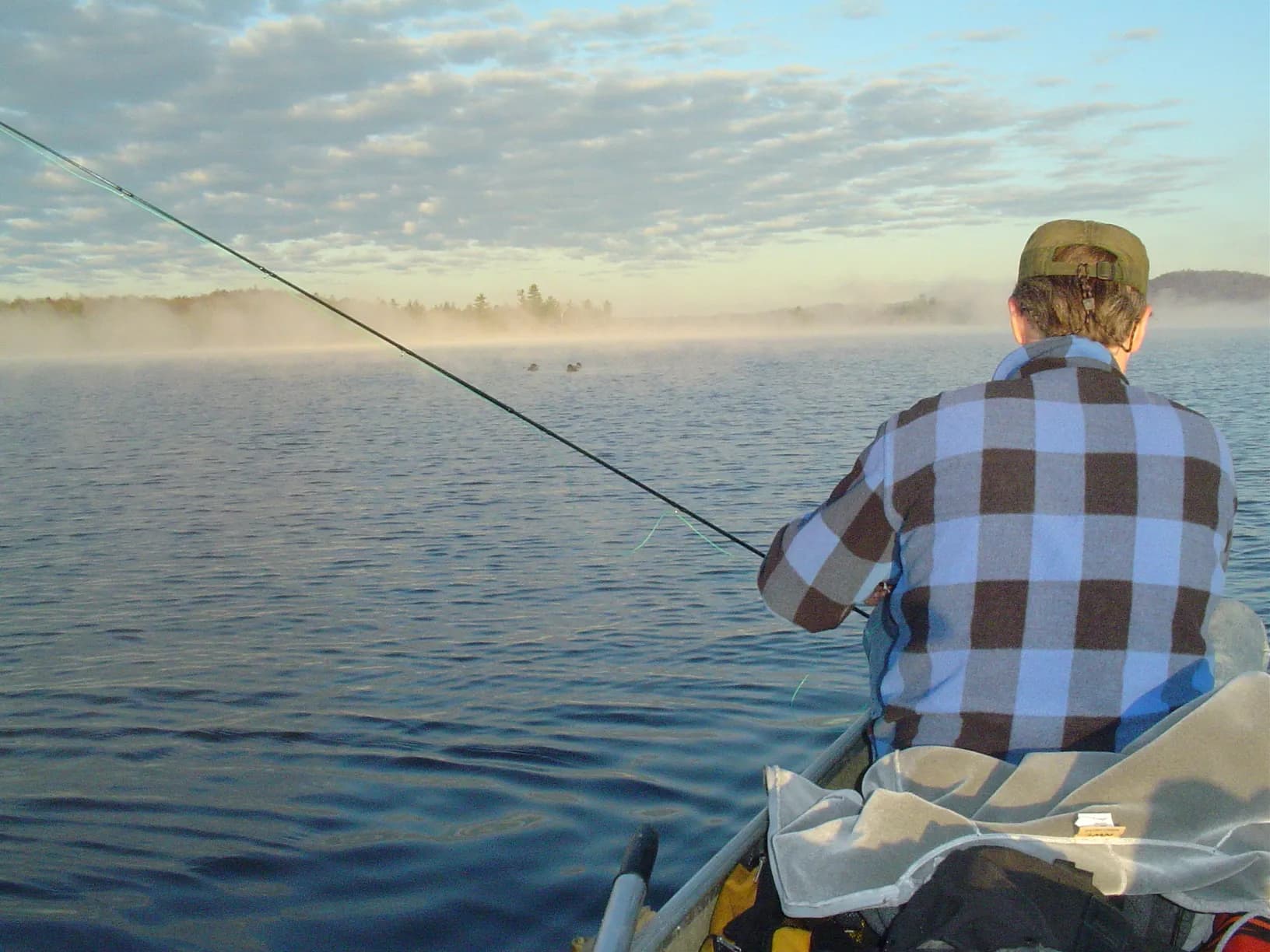
Tom Horgan has spent 30 years mastering the Adirondack's spring creeks and mountain lakes, reading the seasonal rhythms that turn brook trout, browns, and landlocked salmon into willing targets from ice-out through fall.
At a Glance
Tom Horgan has spent 30 years mastering the...
The Ausable River descends from the High Peaks of the Adirondacks toward Lake Champlain, dropping nearly 500 feet over its 40-kilometer run through this section. The river splits into East and West branches upstream, each with distinct character—the East Branch carries faster gradient and colder water from higher elevations, while the West Branch meanders through more forgiving terrain. Both merge near the town of Ausable Forks before the main stem settles into a broader, slower flow as it approaches the lake.\n\nThis is wild brown and brook trout water, sustained by cold groundwater seepage and consistent spring flows. The Ausable rarely runs too high or too low thanks to the surrounding geology and elevation—the USGS gauge at Ausable Forks (04275500) typically holds between 200 and 400 cubic feet per second during the main season. Dry-fly fishing dominates from May through October, with reliable hatches of Hendricksons, Sulfurs, and Isonychia. Nymph work and small streamers produce year-round, particularly in the deeper pools and around structure. The river's freestone character means it fishes well within days of rain, a significant advantage in the Northeast.\n\nAccess is straightforward along Route 9N and secondary roads, with multiple public and private access points. The lower sections near Ausable Forks hold larger fish and deeper pools suited to swing-and-strip techniques, while the upper branches reward technical dry-fly work in tighter, faster runs. The surrounding Adirondack landscape—mixed hardwood and conifer forest, rocky banks, and mountain views—provides the setting, but the fishing is what keeps anglers returning: technical enough to demand focus, productive enough to reward it, and wild enough to feel earned.
Fly FishingPrimary Method
Jan-DecSeason
GuideProperty Style
Lake Placid · NY · USLocation
Location
Adirondack Fly Fishing Expeditions
Lake Placid, NY, US
Approximate location
Species & Seasons
Target species and seasons
Australian BassPrimary
Red SalmonAvailable
Methods
Fishing methods and approaches
My guiding year in the Adirondacks is dictated by the seasons and the behavior of our resident trout and salmon. Spring kicks off with the ice-out, bringing trout closer to the surface in ponds and moving them into faster water in streams as they seek oxygen and food. This is a prime time for anglers, especially those new to fly fishing, to target aggressive trout. As summer arrives, the fishing can become more challenging in streams due to warmer water temperatures, pushing trout deeper or into faster currents. However, the evenings often bring rising fish, and 'terrestrials' become a key to catching larger trout. Ponds can be tough in summer as fish go deep, but spring-fed areas can still produce. Fall brings a welcome return to more consistent temperatures, and trout begin to move back into their spring haunts. This is also the season for the spring and fall run landlocked salmon, offering a different kind of challenge and trophy opportunity. Winter fishing is possible on streams during warm spells, with fish holding deep, and on lakes where ice fishing can be productive.
Fly FishingPrimary
Trout FishingAvailable
Salmon FishingAvailable
Fly FishingAvailable
FreshwaterAvailable
Guided TripsAvailable
This profile is growing — details are confirmed directly with the lodge.
Exclusive Offers
Direct Booking
No Booking Fees
Book directly with the lodge
VOIAGE Exclusive Offer
Coming Soon
Reserved for the Voiage community