Guntersville · AL · US
Mildrilla Fishing
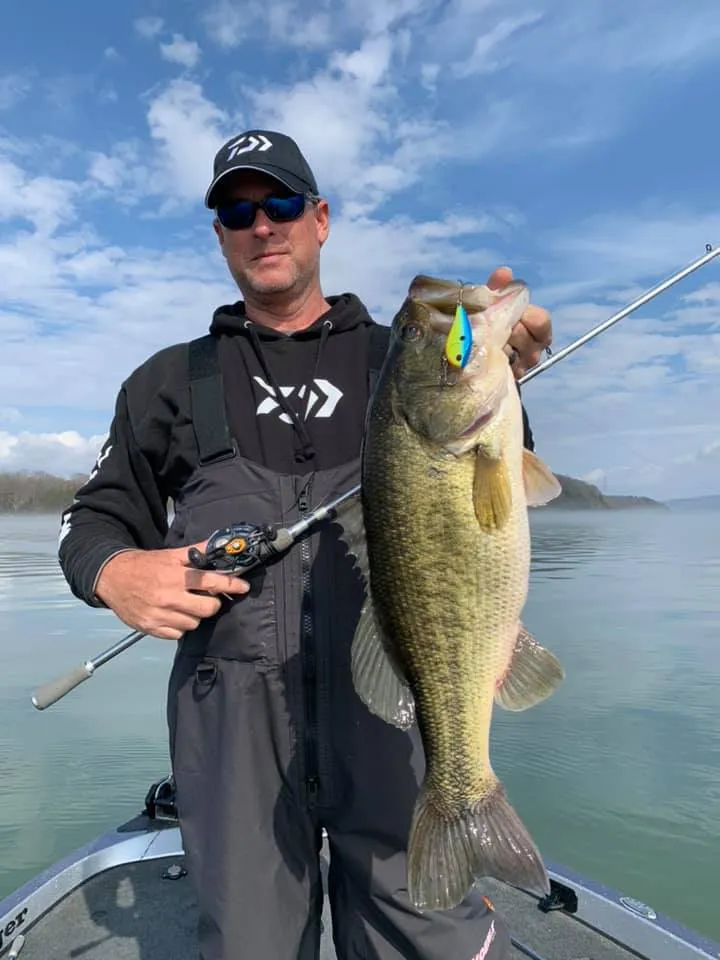
Tim Chandler of Mildrilla Fishing provides expert bass fishing trips on Lake Guntersville and the Tennessee River. With 38 years of experience, he targets largemouth and smallmouth bass across all seasons.
At a Glance
Tim Chandler of Mildrilla Fishing provides expert bass...
Guntersville Lake stretches 69 miles across north-central Alabama, a Tennessee River impoundment that has become one of the Southeast's premier bass fisheries. The lake's shallow average depth—around 8 feet—and extensive grass beds, timber, and rocky points create ideal habitat for both largemouth and smallmouth bass. The area around Guntersville proper offers reliable sight-fishing in spring and fall, when bass move into the shallows to spawn and feed. Summer fishing focuses on deeper structure and early morning topwater work before heat pushes fish to cooler water. Winter can be productive on the lower lake near the dam, where current and deeper holes concentrate fish.\n\nThe lake's hydrology is stable year-round thanks to TVA management, meaning water levels remain predictable and guides can rely on consistent access to proven spots. Largemouth dominate the upper and middle lake sections, where vegetation is thickest; smallmouth prefer the rocky lower lake near the dam. Spinnerbaits, crankbaits, and soft plastics work throughout the year, though topwater and sight-fishing with worms or jigs draw the most dedicated anglers during spring. The lake sits at roughly 600 feet elevation and benefits from a long growing season, supporting robust forage and healthy bass populations in the 3- to 6-pound range, with occasional 8-pounders. Guntersville's proximity to Interstate 59 and its established guide fleet make it accessible for weekend trips, and the lake's size means plenty of water to explore without feeling crowded.
FreshwaterPrimary Method
Jan-DecSeason
GuideProperty Style
Guntersville · AL · USLocation
Location
Mildrilla Fishing
Guntersville, AL, US
Approximate location
Species & Seasons
Target species and seasons
Methods
Fishing methods and approaches
My guiding year on Lake Guntersville is a dynamic cycle dictated by the bass's behavior and the changing vegetation. From January through March, the grass is dormant, and I focus on bass staging in pockets and along break lines, using techniques like targeting humps and break lines. As spring arrives with March and April, the water warms, triggering the pre-spawn and spawn. This is a prime time to find bass in very shallow water, typically 1-4 feet deep, and I employ lures that work best in these conditions. April and May bring a mix of pre-spawn, spawn, and post-spawn bass, meaning fish are present in all water depths and can be caught on a variety of lures and techniques. The summer months, June through August, see the bass moving deeper to recover from the spawn. Topwater baits over the rapidly growing grass become excellent, as do deep-diving crankbaits on humps and ledges. However, the most exciting pattern is flipping jigs into the thick milfoil and hydrilla. As the temperatures cool in September and October, bass move back to shallower water, making this an absolute prime time for explosive topwater action with frogs and rats over grass mats, targeting both largemouth and smallmouth. Finally, November through December sees the grass dying back, and while the fish scatter, they can still be found and caught on spinnerbaits, buzzbaits, and crankbaits worked through the remaining grass stems.
FreshwaterPrimary
Guided TripsAvailable
This profile is growing — details are confirmed directly with the lodge.
Exclusive Offers
Direct Booking
No Booking Fees
Book directly with the lodge
VOIAGE Exclusive Offer
Coming Soon
Reserved for the Voiage community