On The Water
Wonderland, With a Blue Ribbon River
Robert Redford built Sundance on a conviction that art and wilderness belong to each other. Fifty years on, the studios still fire glass, the amphitheater still fills — and a Blue Ribbon river still runs cold past the door.
Wonderland, With a Blue Ribbon River
Robert Redford built Sundance on a conviction that art and wilderness belong to each other. Fifty years on, the studios still fire glass, the amphitheater still fills — and a Blue Ribbon river still runs cold past the door.
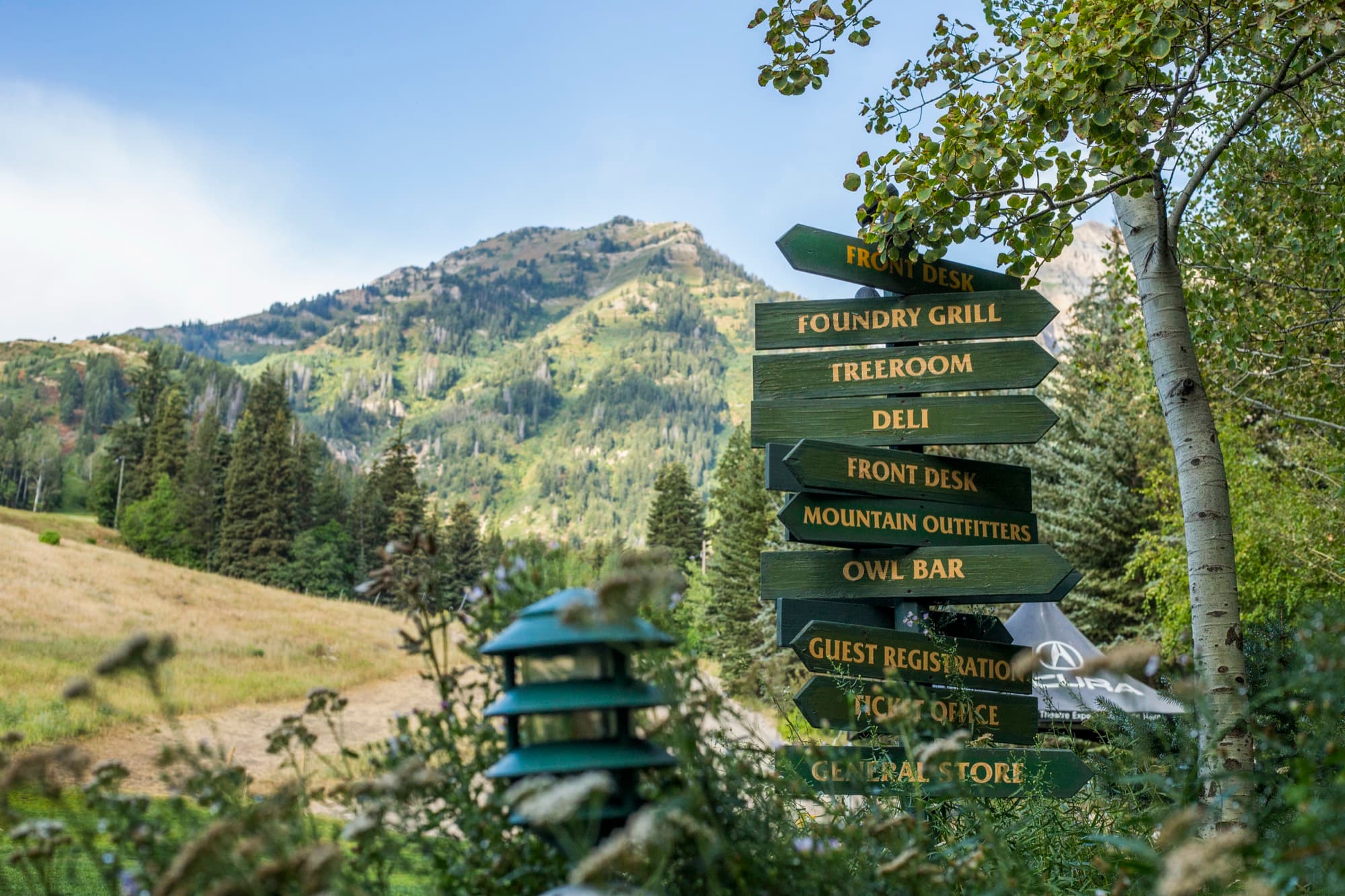
I've stayed at Sundance, and I can tell you the feeling it gives you has no proper name — the closest I can come is Alice in Wonderland with waders on. It's an adventure at every turn: paths that wind through the aspens and arrive somewhere unexpected, a working glass studio glowing at the end of one, a bar with outlaw history at the end of another. Outside my cabin, the river bubbled me awake each morning before the light had fully committed to the canyon, and I sipped my coffee on the patio watching a bird build her nest a few feet away, both of us unbothered. The steak I had beneath the famed tree in the Tree Room was impeccable. By the second day I'd stopped checking the map. Getting a little lost is the point of the place.
None of it is accidental. In 1969, an actor best known for playing an outlaw bought this canyon. Robert Redford had fallen for a fold of the Wasatch beneath Mount Timpanogos — 12,000 feet of ridgeline the locals call the Sleeping Princess — and instead of the ski-city development the land was destined for, he built something stranger and better: a village-scale resort organized around the idea that creativity and wilderness are the same appetite. He named it for the outlaw. The film festival that borrowed the name would eventually eclipse it; the canyon never noticed.
Half a century later, Sundance remains one of the American West's singular places to stay — rustic-modern rooms scattered through aspen and pine, working studios where guests blow glass and throw pottery in the afternoon, an amphitheater under the stars, and the Tree Room's gallery of Native American art wrapped around one of Utah's most celebrated menus. What the skiers and festival-goers often miss is the detail anglers should not: this is an Orvis-Endorsed Fly-Fishing Lodge, and one of the premier Blue Ribbon trout rivers in America runs five minutes from your door.
The River
The Provo flows 81 miles from the high Uintas to the valley floor, and its Middle and Lower sections are the kind of tailwaters anglers build lists around — stable flows, prolific hatches, wading access that forgives, and a wild-fish density of roughly 4,000 trout per mile. The average fish runs 14 to 20 inches; the ones past 25 exist in sufficient numbers to keep everyone honest. Utah's Blue Ribbon designation is the state's official mark for its highest-quality wild fisheries — a government-certified superlative, not a brochure's — and the Provo has carried it for good reason. This is the home water Utah anglers measure everything else against.
The fishing runs all four seasons, each with its own personality: dry flies in early spring, nymphing through the summer crowds of bugs (if not of people), streamer weather when the cottonwoods turn, and a winter midge hatch reliable enough that the guides fish Christmas week in earnest. Forty-five minutes north, the Weber runs a near mirror image off the same range — wild browns past 25 inches and late-summer hopper fishing that borders on unfair — and the program keeps a quiver of remote small streams an hour out, where dry-fly fish over 20 inches rise in water you'll have entirely to yourselves.
The Program
Sundance's fly-fishing operation was built in 2016 by Brian Wimmer, a Provo guide since 2004 who remains the resort's fly-fishing ambassador — and it carries the resort's craft sensibility onto the water. Trips run year-round at one guide for every two guests, so instruction never dilutes. Everything is provided: waders, boots, rods, reels, flies, transport, streamside lunch from the Sundance Deli on full days. The fly shop in the village is the only one on the Lower Provo, which tells you something about how seriously the house takes its river.
And the program is deliberately open at both ends of the skill curve. The technical angler gets the Provo's famously demanding hatches. The beginner gets what the guides call their favorite clients — no bad habits, and the excitement of a first river — with casting clinics on the lawn, fly-tying sessions that sneak in a little entomology, and dedicated women's clinics. Few places make it this graceful to arrive knowing nothing and leave wanting everything.
The Legacy
Here is the detail that makes Sundance unlike anywhere else an angler can stay: the man who built it also directed A River Runs Through It — the 1992 film that sent a generation to fly shops and put the sport's poetry into the American bloodstream. The resort has screened the film on its own mountain, with its founder in attendance. Fishing the Provo at golden hour, canyon light on the water, it is difficult not to feel you've waded into the establishing shot.
The art is not garnish here; it's the point. Mornings on the river pair with afternoons in the glass studio; the Owl Bar pours nightcaps across a restored 1890s rosewood bar with genuine outlaw history behind it; and dinner in the Tree Room happens inside the founder's own collection. The conviction the canyon was built on — that wildness and creativity feed each other — turns out to be a fair description of fly fishing itself, which may be why the pairing feels less like a resort amenity package and more like a philosophy you can book.
Before You Go
Sundance sits in Provo Canyon, under an hour from Salt Lake City's airport — one of the most accessible great fisheries in this Field Guide, and one of the few that pairs world-class water with a full resort for the non-fishing half of the party (skiing in winter, Stewart Falls trails and the amphitheater in summer, the spa year-round). Come spring or fall for the river's marquee windows; come winter for the midge hatch and empty runs; book guided days ahead in peak season, and buy your Utah license before your trip — the fly shop covers everything else. Rooms run from lodge studios to mountain homes sleeping full family gatherings.
See Sundance Resort on the atlas →
Program details verified with the resort's fly-fishing operation, July 2026; the resort is the authority on current rates, seasons, and availability. Robert Redford founded Sundance in 1969 and sold the resort in 2020; its founding character, happily, appears to have been part of the deal.